The Art of the Fauves Treats Color Logically Expressively Naturalisticly
Netflix, Thames & Hudson, Alberto Peroli, Roderick Mickens
Later a long, dark winter—arguably the longest and darkest that many of the states have experienced—spring's beauty is finally hither, and a veritable rainbow has descended upon us. The blushing pinkish of magnolia bushes, the fiery ruby and sunny xanthous of rows of tulips, the well-baked pea green of fresh blades of grass.
If all of these brilliant and hopeful hues have you wanting to take a deeper dive into their scientific, cultural, and decorative underpinnings, you're in luck. A trio of cultural endeavors—two of which you can enjoy from abode—explores the ability of color in our daily lives. And who knows? Perhaps they will inspire you to incorporate a bolder palette at home.
"The Nature of Color" at the American Museum of Natural History (AMNH)
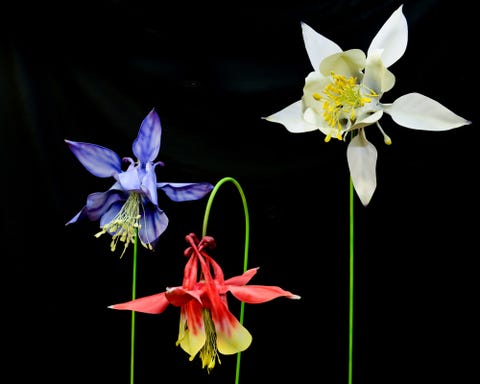
Though it outset opened over a year ago at New York's AMNH, this exhibition, like those at so many other museums, was airtight for the majority of 2020. It is at present enjoying a longer run through August 8, specially adept news for parents looking for an air-conditioned outing this summer. "The Nature of Color" takes a multidisciplinary approach to investigating color and how both animals and humans experience and use it. A color-changing room and calorie-free lab demonstrate how white light is composed of different colors, which can influence our moods and behaviors. (Shorter wavelengths, for instance, tend to exist experienced every bit "cool" colors and longer ones as "warm" colors, a possible evolutionary evolution to help animals distinguish the bluish calorie-free of midday from the reddish, orangish, and yellow calorie-free of dawn and dusk. A nature-themed section demonstrates how colors help animals either stand up out or cover-up themselves, and a more than culture-oriented area points out how i hue tin accept a panoply of meanings, every bit in red's association with diverse political parties and fashion moments. There is also an installation of photographs past the Brazilian artist Angélica Dass, showcasing humans with a range of skin tones that defy narrow categorization.
Life in Color with David Attenborough on Netflix
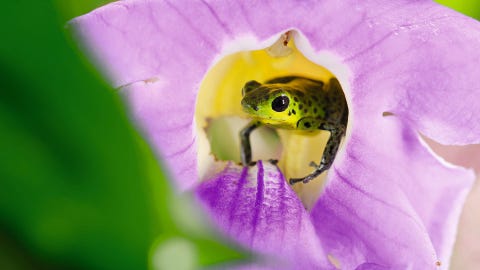
This three-part Netflix series narrated by the beloved 94-year-old British naturalist David Attenborough dropped on Earth Day last month and delves into the ofttimes undercover world of color inside nature. Many of the colors that animals use to communicate are not visible to the human center. The wings of sure butterfly species, for instance, reverberate ultraviolet light as office of mating rituals. Using camera technology especially developed for the program, the show's creators bring those normally clandestine hues to life for viewers to dazzling outcome. Over the course of the iii episodes, we as well learn about the poison dart frog'due south flaming warning colors, the aquatic-blue-striped blenny's camouflaging array on Commonwealth of australia's Great Barrier Reef, and the Bengal tiger's stripes. Those looking for a more sober bookkeeping of nature'due south prognosis at the hands of humans can follow up Life in Color with the 2020 Netflix film A Life on Our Planet, which Attenborough produced and in which he gives a "witness statement" of his life-long devotion to the natural world and his fears for its survival.
A Century of Color in Design by David Harrison
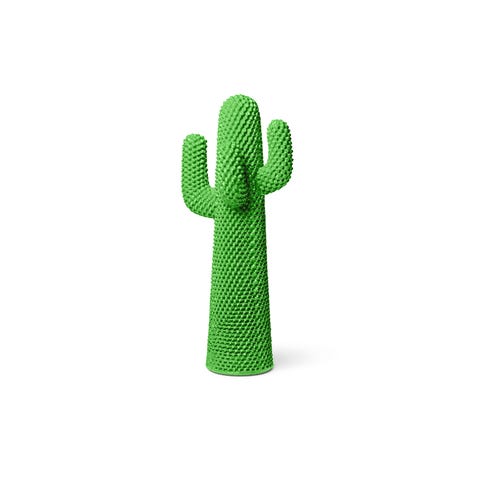
In this detailed tome from Thames & Hudson, the Australian pattern journalist and interiors stylist David Harrison explores the advent of bold colour in product design beginning in the 1920s through the nowadays twenty-four hours.
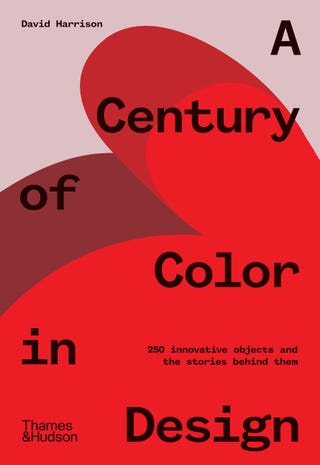
Out May 11, the book starts with the impact of the Bauhaus and De Stijl movements on bringing primary colors into the home and highlights the influence of post–World War Two industrialization on Italian blueprint, an example of which is Marco Zanuso'south 1948 lipstick red Antropus armchair (relaunched by Cassina in 2015).
Harrison then moves into the zaniness of the 1980s Memphis motion and more contemporary approaches. Throughout, he highlights such iconic pieces every bit Verner Panton'south vibrant Heart Cone chair (1959), Maija Isola's poppy Unikko impress for Marimekko (1964), Anne Castelli Ferrieri's processed-hued Componibili storage for Kartell (1967–69), and Patricia Urquiola'south multicolored Tropicalia chair (2008).
In the end, Harrison notes that our century-long obsession with bright hues in furniture and products may somewhen reach its "saturation point"—pun intended—leading to more subdued iterations. Simply as you'll take learned from the programs in a higher place, our natural affinity for a colorful world is probable eternal.
This content is created and maintained by a 3rd political party, and imported onto this page to assist users provide their email addresses. You may be able to find more information almost this and similar content at piano.io
Source: https://www.elledecor.com/life-culture/a36179241/color-nature-design-cultural-listings/

Postar um comentário for "The Art of the Fauves Treats Color Logically Expressively Naturalisticly"